What I Believe
“Those who hope in the Lord will renew their strength.”
— Isaiah 40:29
God allows the storms of this life, but He promises to guide us through them. In Psalm 23 David writes, “Even though I walk through the darkest valley, I will fear no evil, for you are with me; your rod and your staff, they comfort me.” Another favorite promise in Isaiah 43:2 assures, “When you pass through the waters, I will be with you; and when you pass through the rivers, they will not sweep over you . . .”
Experiencing cancer is a chance to put God in the right place in your life. I love this quote by Charles Spurgeon, “I have learned to kiss the waves that throw me against the rock of ages.” For me, true confidence in not fearing the days ahead comes from my faith in God, the Lord Jesus Christ. Our faith — what we believe — makes all the difference.
Even though I place high value on the many tools I have shared on this site, this is the most important page to me because ultimately, God is the Great Physician. He promises to be near all those who seek Him. He is the greatest treatment of all! God is sovereign. That means as ruler of the universe, He has complete authority over everything that happens on this earth, including sickness and disease, health and healing. While our human nature desires control, we must instead have faith and submit our situation to God.
My Faith Journey
In 2015, despite thriving careers and well-adjusted children, a nagging emptiness in my soul led me to a fervent prayer: “Lord, I want to experience you in all your fullness." I knew something was wrong in my life spiritually. That cry of my heart was the beginning of a perilous, unexpected, 8-year journey through several painful life events that I would never have wished for but would also never exchange.
2015-2017
In 2015, my family was on the mountaintop with blessings at every turn. There were days I even felt guilty to have so many blessings in my life while watching family or friends walk through suffering. Yet despite every reason to feel content, there was a deep emptiness inside me—a void I couldn’t ignore. I knew it was God calling me closer.
As a pastor’s daughter, I had grown up in a Christian home. I knew the truth, so I began to seek God more intentionally. But despite my efforts, I was still caught on the hamster wheel of life—busy, distracted, and consumed by the world. I allowed the success of my family and job to consume most of my time. I didn’t realize it then, but I made very little room for God. Praying and reading my Bible were simply items I checked off my list each day.
Then the trials began, one after another. I never could have imagined the twists and turns we were about to face as a family.
2017 - 2019
Two cancer diagnoses drove me to chase after the Lord once again. I stared death in the face and discovered once more that it was a deeper relationship with God that I was missing. Even with that knowledge, I allowed life to continue to distract me and I rode the hamster wheel. God was reaching out to me, but I wasn’t listening.
2020 - 2023
We began to do everything possible to heal our bodies, and I got distracted again with CAM (complementary and alternative medicine) treatments and, of course, Covid. God was certainly present on my daily list, but I was doing my own thing and pretending to be in good standing with Him. I was going through the motions of a spiritual life. From the outside it looked great, but on the inside, I was moving in the opposite direction of a deeper relationship with God.
June 7, 2023
I began my true journey of spiritual healing. I met a godly woman who began life coaching with me, and I read a book called, Who is the Holy Spirit? I came to understand who the Holy Spirit is, what He does, and how my life would be completely different surrendered to Him. The Holy Spirit is Jesus and God the Father; they are three entities in one person. It is difficult with our human minds to comprehend this, but it is sort of like an egg having 3 parts (shell, white, and yoke) while still being a single egg.
In John 14:16-17, Jesus reveals His plans to leave this earth after His death on the cross. He explains to His disciples that this will actually be good because the Holy Spirit will then live inside of them. He says, “And I will ask the Father, and He will give you another Helper, to be with you forever, even the Spirit of truth, whom the world cannot receive, because it neither sees Him nor knows Him. You know Him, for He dwells with you and will be in you.” Once you decide to trust Christ as your Savior, the Holy Spirit comes to live inside you. All Christians have the Holy Spirit. The question is: Are you going to yield to the Holy Spirit and allow Him to lead and guide you each day?
By July, at the age of 57, I fully surrendered to the Lord Jesus Christ. I wake up each morning with peace and joy in my heart because I have yielded and am maturing in my faith in God each day. He is transforming my heart and my life, and I am bearing fruit in my life. Galatians 5:22-25 says, “But the fruit of the Spirit is love, joy, peace, patience, kindness, goodness, faithfulness, gentleness, self-control; against such things there is no law. And those who belong to Christ Jesus have crucified the flesh with its passions and desires. If we live by the Spirit, let us also keep in step with the Spirit.”
James 1:2-4 says, “Count it all joy, my brothers, when you meet trials of various kinds, for you know that the testing of your faith produces steadfastness (patient endurance, perseverance). And let steadfastness have its full effect, that you may be perfect and complete, lacking in nothing.” James doesn’t mean trials are joyful, but instead, they are an opportunity to grow up in our faith and draw closer to God. That is what has happened to me in these years - my faith has been tested and refined. I still have days where I get distracted and take my eyes off of Him. But each time I fall, He picks me up; each time I take back control, He gently calls me to trust Him. I can say with confidence that I have tasted His goodness and I have been carried by His steadfast love. Every day I spend time in the presence of the Lord — reading the Bible and journaling my prayers. Looking back, it seems inconceivable that both Joel and I could have cancer in our early 50s, but the truth is that was just another stepping stone God used along the way to get my attention to truly walk with Him.
If you are reading this because you have found yourself tossed about by the storms of life and don’t know where to turn, or if you feel a gaping hole in your heart that you can’t seem to fill, I hope my story inspires you to place your trust in Christ and yield to the Holy Spirit to allow Him to lead you and guide you forward. If we are to live the life that God truly has for us, we must have the Holy Spirit guiding us! When we walk in the Spirit, we are excited to experience every day and see what God is going to do next!
“You can’t go back and change the beginning, but you can start where you are and change the ending.”
Hannah’s Faith Journey
What We Believe
BY HANNAH HERBST
When something devastating (such as a cancer diagnosis) happens, many begin wondering why evil and suffering occur. I certainly did. My name is Hannah; I’m Julie and Joel’s daughter. I am a 23-year-old business owner. I was 17 when my dad was diagnosed with colon cancer and 19 when my mom was diagnosed with breast cancer. There was a tangible shift in all of our lives with my dad’s diagnosis, marked by a transition from constant work and “hustle culture” to chemotherapy treatments, doctor’s appointments, and both physical and emotional pain.
When my parents were battling cancer, I was incredibly lost and hurt. I realized that the questions I was asking about evil, suffering, and eternity had always been there, but they had suddenly become more urgent. I now know that all evil, including cancer, must be considered in light of the entire world’s story.
In the beginning God, who is infinite, eternal, and perfect, created the world and all that dwells in it, as described in Genesis chapters one and two. God created humans in His own image, meaning that we resemble God spiritually, physically, intellectually, emotionally, morally, and relationally. This is why we think, we create, we feel emotions, we have relationships and friendships, and we feel love, joy, anger, sadness, and pain. Although we do have resemblance to God, we resemble Him incompletely. God is infinite and eternal, while we are not; He is always present, unchangeable, powerful, faithful, holy, just, merciful, and gracious, while we are limited, constantly changing, and imperfect [2].
When God created the world and the first humans, He placed them in the Garden of Eden, where they had perfect fellowship with Him. He called all of creation, including the deepest of oceans and the highest of mountains, “good,” while He called us, as His image bearers, “very good.” We were fully known and loved by God from the beginning of time. The Garden of Eden was perfect: there was no sickness or death, no shame, and no suffering. G.K. Chesterton states, “And the more I considered Christianity, the more I found that while it had established a rule and order, the chief aim of that order was to give room for good things to run wild.” God created order, logic, and consistency within the universe to allow for those good things to run wild. He gave humans dominion over all the Earth in Genesis 1:26, meaning they were free to creatively fill and develop the Earth. Along with this privilege, God also clearly defined the boundaries: “. . . the tree of the knowledge of good and evil you shall not eat, for on the day that you eat it, you will surely die” (Genesis 2:17). God’s boundaries were clearly life-giving, as their primary purpose was to prevent death and foster a relationship with Him.
In Genesis 3, Satan reveals himself in the garden. In John 8:44, Satan is described as “. . . a murderer from the beginning, not holding to the truth, for there is no truth in him . . . he is a liar and the father of lies.” Satan entered into the picture “to steal, to kill, and to destroy” the first humans and their perfect fellowship with God (John 10:10). Satan ultimately convinces the first man and woman to reject God’s word, spurn God’s authority, deny God’s character, and take God’s place by sinning and eating the fruit that God commanded them not to eat [1,2]. Since the original rebellion of man and woman, sin has impacted every human being.
Sin strikes at the basis of knowledge, causing us to question what is true. It strikes at the basis for moral standards, causing us to question what is right. And it gives a different answer to the question, “who am I?” by tempting us to become “like God” rather than submit to Him [1]. Immediately following humanity’s rebellion, the world changed: the image of God in us was marred and dimmed. The world was physically broken and spiritually controlled by Satan and “spiritual forces of evil in the heavenly places” (Ephesians 6). Further, the human body was made imperfect for the first time; it was suddenly susceptible to disease, such as cancer (Romans 1:19). A world where we once walked with God perfectly became a world in which relationships are broken, people oppress and harm one another, and sickness harms the human body, mind, and spirit. The first two humans were banished from the Garden of Eden into a barren world ruled (temporarily) by Satan (Ephesians 6:10-20).
All hope, however, was not lost. Immediately after the fall of humanity, God promised the first man and woman that He would defeat Satan, sin, and death, therefore reuniting humanity with God forever and ever through the woman’s offspring (Genesis 3:15). In this moment, God promised that suffering would occur, but He left us with hope that He would eventually have victory.
God reveals Himself to humanity through the Bible, which is divided into two major sections: the Old Testament (Genesis-Malachi) and the New Testament (Matthew-Revelation). The Old Testament tells the story of Israel, God’s chosen people. It is a story of loss and gain, of rebellion and restoration. Most of all, it tells the story of God, who is rich in mercy and abounding in steadfast love. He pursues His people, regardless of how much they turn from Him, and He keeps all of His promises (Exodus 34:6-7).
After 39 books of God chasing His rebellious people down and 400 years of silence elapsing at the end of the Old Testament, we are introduced to a new character. A baby, born in a barn to a teenage girl, who was miraculously impregnated by God prior to marriage, as described in Luke 1:26-38. This baby, Jesus, is described as “the Word”:
“In the beginning was the Word, and the Word was with God, and the Word was God. He was in the beginning with God. All things were made through Him, and without Him was not anything made that was made. In Him was life, and the life was the light of men, the light shines in the darkness, and the darkness has not overcome it . . . the true light, which gives light to everyone, was coming into the world. He was in the world, and the world was made through Him, yet the world did not know Him. He came to his own, and his own people did not receive Him. But to all who did receive Him, who believed in his name, He gave the right to become children of God, who were born, not of blood nor of the will of the flesh nor of the will of man, but of God. And the Word became flesh and dwelt among us, and we have seen his glory, glory as of the only Son from the Father, full of grace and truth . . . For from his fullness we have all received, grace upon grace. For the law was given through Moses; grace and truth came through Jesus Christ” (John 1).
The four Gospels (Matthew, Mark, Luke, and John) are parallel accounts of the life of this baby, the Word: Jesus of Nazareth. After He is baptized by John the Baptist, Jesus is led by God to be tempted by Satan for over forty days in the wilderness. Unlike the first man and woman in the Garden of Eden, Jesus does not sin once. Rather, He resists by quoting Deuteronomy, the Old Testament book that details Israel’s exile in the wilderness (Genesis 3 vs. Matthew 4). Jesus summons twelve disciples, or students, and travels across the Middle East, teaching massive crowds about God, and revealing the mystery of His kingdom and the unfolding story of reality. Jesus came to fulfill the Old Testament law given to Moses on Mount Sinai, and He came to lay down His life as a ransom for many (Mark 10:45).
Throughout His life, Jesus never claimed to be solely a good moral teacher, a prophet, a kind person, or even a saint. Rather, Jesus repeatedly claims to be God. We see this in John 14:7, Matthew 10:40, and Mark 14:60-62 where He claims equality with God; John 3:16, Matthew 10:39, and John 10:28 where He claims to give eternal life; and Mark 2:5, Matthew 9:2, and Luke 5:20 where He forgives sins.
C.S. Lewis clarifies Jesus’ identity, “I am trying here to prevent anyone saying the really foolish thing that people often say about Him [that is, Christ]: ‘I’m ready to accept Jesus as a great moral teacher, but I don’t accept His claim to be God.’ That is the one thing we must not say. A man who was merely a man and said the sort of things Jesus said would not be a great moral teacher. He would either be a lunatic – on a level with the man who says he is a poached egg – or else he would be the Devil of Hell. You must make your choice. Either this man was, and is, the Son of God: or else a madman or something worse . . . You can shut Him up for a fool, you can spit at Him and kill Him as a demon; or you can fall at His feet and call Him Lord and God. But let us not come up with any patronizing nonsense about His being a great human teacher. He has not left that open to us. He did not intend to.”
At the end of his life, detailed in Mark 14, Jesus is betrayed and abandoned by nearly everyone He knew — including His twelve disciples, who lived with Him for three years, and His own family. He is sentenced to death by Roman authorities for repeatedly claiming to be God, and He dies the most brutal death imaginable at the time: public execution on a wooden cross [3]. In Mark 15, He was tortured, flogged, and literally nailed to a wooden crossbeam to die. There is not one known survivor of Roman crucifixion in the entire history of the practice. Jesus is pronounced dead, and His body is buried in a tomb. His twelve disciples flee and hide, and for a moment, Satan and death have the victory.
Three days later, something absolutely miraculous happens — something that had never occurred before in the entire history of humanity. Jesus Christ rose from the dead, appearing in bodily form to two women, and then to the twelve disciples, detailed in all four gospel accounts separately (see Matthew, Mark, Luke, and John). Death is conquered, Satan is defeated, and Jesus Christ secured the victory in the most unlikely of fashions. Over 500 people witnessed Jesus’ return from the dead in a physical body that they could see and hug, as real as you and me.
Paul sums it up in 1 Corinthians 15: “Christ died for our sins in accordance with the Scriptures (the Old Testament), he was buried, he was raised on the third day in accordance with the Scriptures, and he appeared to Cephas, and then to the Twelve [disciples]. After that, he appeared to more than five hundred of the brothers and sisters at the same time . . . then he appeared to James, then to all the apostles, and last of all he appeared to me also.”
Thomas, as a good investigator, had to put his finger into the nail holes left in Jesus’ hands and the stab wound in His side before confessing, “. . . My Lord and my God!” and acknowledging that Jesus was indeed back from the dead (John 20:24-29).
The remainder of the New Testament, from Acts to Revelation, details why Jesus’ life, death, resurrection from the dead, and ascension into heaven is of pivotal importance to each and every human life today.
I was brought up by two Christian parents, living in America in a culturally Christian society, and therefore called myself a Christian. However, until December of 2020, after both of my parents had battled and conquered cancer, I had no idea what it meant to follow Jesus. I finished my final exams and graduated from college with my Bachelor of Science. I achieved many accomplishments that I had worked hard to attain; I thought they would fulfill me and give me value, but they failed to. On my graduation day, my Aunt Bonnie gave me a copy of Nabeel Qureshi’s book, Seeking Allah Finding Jesus. This book changed my life. Reading Nabeel’s testimony from his point of view challenged everything that I thought I knew about Christianity. Watching him transform into someone who takes up his cross daily to follow Jesus (Matthew 10:38) was incredible. Seeing the evidence for Christianity as he laid it out, both physical (Jesus’ death, burial, and resurrection) and spiritual (transformation of lives through Christ) changed my heart.
I quickly came to the realization that Christianity was not a “pray a prayer one time and you are no longer going to hell” type of faith. Christianity is a complete life transformation, described in Galatians 2:20: “I have been crucified with Christ. It is no longer I who live, but Christ who lives in me. And the life that I now live in the flesh I live by faith in the Son of God, who loved me and gave himself for me.”
The mark of a true Christian is someone who follows Jesus. A fantastic example of this is found in Acts 9. The story begins with Saul actively murdering massive amounts of Christians for their beliefs. In Chapter 9, he is walking on the road to Damascus, “. . . when suddenly a light from heaven shone around him. And falling to the ground, he heard a voice saying to him, ‘Saul, Saul, why are you persecuting me?’ And he said, ‘Who are you, Lord?’ And he answered, ‘I am Jesus, whom you are persecuting. But rise and enter the city, and you will be told what you are to do.’ The men around him stood speechless, hearing the voice but seeing no one. Saul rose from the ground, and although his eyes were opened, he saw nothing. So they led him by the hand and brought him into Damascus.”
Shortly after this, Saul regains his sight, and the Lord gives him a new name: Paul. This is the same Paul who wrote nearly half of the New Testament. We see another example of this in Genesis chapter 12 with Abram: “Now the LORD said to Abram, ‘Go from your country and your kindred and your father’s house to the land that I will show you. And I will make of you a great nation, and I will bless you and make your name great, so that you will be a blessing.’ So Abram went, as the LORD had told him.’
The pattern repeats itself: the Lord tells both Saul and Abram to go, and they obey immediately. This is the only appropriate response to grace. The Lord will give Abram a new name too: Abraham, the same Abraham from which all of God’s chosen people descended, including Jesus Christ.
There are many questions to wrestle with that may come out of these paragraphs. How do we know that Jesus really rose from the dead? How do we know that Jesus was really God? If God is good, why am I or my loved one suffering with cancer? Why does a good and just God allow evil to occur? How do I know that God exists? Why should Jesus rising from the dead hundreds of years ago change my life and the way that I live? Is Jesus really the only way to God?
These are incredibly important questions, and there are many more where those came from. I encourage you not to sit with those questions, but to investigate them. Jesus made claims throughout His life in absolute statements that are either true or false, but cannot be both, and cannot be ignored. I encourage you to determine whether the Bible is truly the reliable word of God, and to read it. I encourage you to get plugged into a local church and ask your questions of people around you. Either Christianity is true at all times for all people everywhere, or it is completely false. Determine for yourself what this page means, and seek the answers. Believe me, it is worth it.
“Now there are also many other things that Jesus did. Were every one of them to be written, I suppose that the world itself could not contain the books that would be written” John 21:25.
References:
Cancer impacts the entire family. My daughter, Hannah, began to seek the answers to questions about God’s existence in light of human suffering. Hannah was close to walking away from faith completely, but she sought to examine the evidence before making such an important decision. The result is that Hannah has become beautifully strong in her faith. It has been an inspiration to our family and all who know her. I asked Hannah to share what she so diligently sought out and wrestled with — finding the answers to why we believe what we believe.
Resources


IF YOU BELIEVE AND WANT TO TRUST CHRIST
Maybe you relate to my story and have known God throughout your life, but you have kept Him in the background. I challenge you to bring Him front and center. There is no better way to traverse this life. Perhaps my story sounds foreign to you. You may not have been exposed to spiritual things in your past. I want to encourage you to ask God to show Himself to you. He loves you and wants to journey this life with you. In John 14:6 Jesus said, “I am the way, and the truth, and the life. No one comes to the Father except through me.”
You can begin a relationship with God, right where you are, by placing your trust in Jesus Christ. He died for your sins because He loves you. He rose from the dead, proving He was God. Romans 10:9 says it simply: “If you confess with your mouth that Jesus is Lord and believe in your heart that God raised him from the dead, you will be saved.” Saved from a life without Him, saved from all of your sins — past, present and future. If you believe that Jesus died on the cross and rose from the dead for you, you should tell Him. You can use your own words or pray something like this:
Dear Lord Jesus,
I know I’m a sinner, but I know that You are the Savior. I believe You died on the cross for my sin and rose from the grave to defeat death and cover my sin. Now come into my life.
Thank you for the forgiveness and everlasting life I now have.
In Jesus' name I pray,
Amen.
Remember, it is not a prayer that saves you; it is trusting Christ that saves. Prayer is simply how you tell God what you are doing.
If you prayed that prayer, either now or previously, I encourage you to:
Find a good Bible-teaching church and get involved so you learn about Christ and follow Him.
Begin talking to God through prayer. Jeremiah 33:3 says, “Call to Me and I will answer you, and I will tell you great and mighty things, which you do not know.”
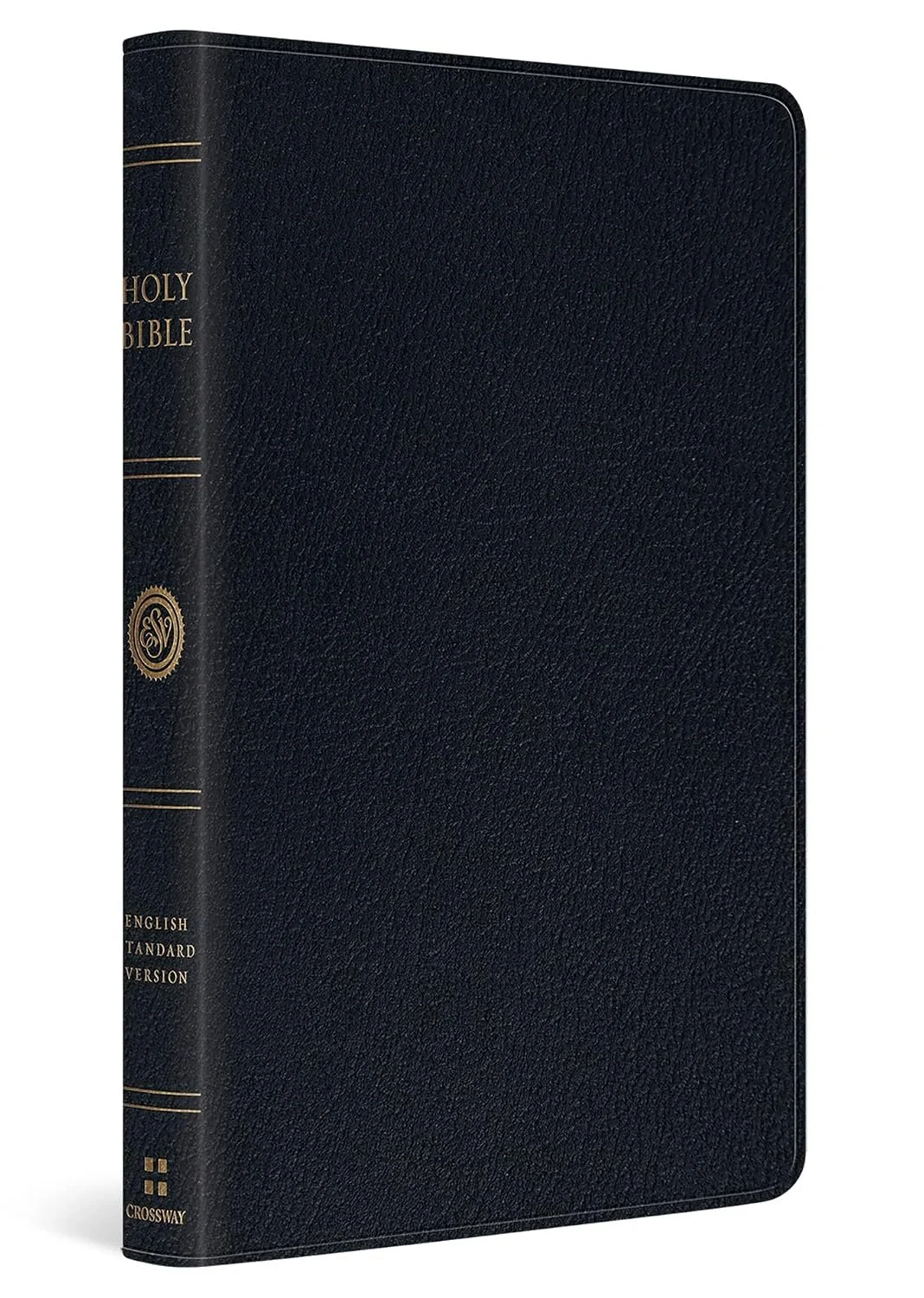
Begin reading the Bible. I suggest starting with the Gospel of John. Find a Bible or download the YouVersion Bible App.
Surrender to the Holy Spirit. I suggest reading Who is the Holy Spirit? by Stonecroft Bible Studies.
BECOMING MINISTRIES, INC.
In the summer of 2024, I shared my faith journey with a small group of women in my home. I called the Bible study Becoming. A year and a half later, Becoming Ministries, Inc. was founded as a nonprofit organization in January 2026.
Through six foundational lessons, participants across the country are experiencing what I experienced through mentoring—encountering God and growing deeper in their faith. The impact of Becoming is truly the power of God at work.