MY HORMONE JOURNEY
What breast cancer taught me about hormones and my health
I was 53 when I was diagnosed with breast cancer that was 90% estrogen-receptor positive (ER+) and 90% progesterone-receptor positive (PR+). My diagnosis led me to learn much more about hormones, menopause, nutrition, lifestyle, and the role hormones can play in certain cancers.
MY MENSTRUAL CYCLE AND PMS
The average age of menarche in rural China is 17, while the average age in the U.S. is 11. Intake of animal food, particularly dairy, increases estrogen levels, which then lowers the age of menarche. These higher hormone levels increase the rates of breast cancer. The incidence of breast cancer is five times higher in the U.S. than in China. https://pubmed.ncbi.nlm.nih.gov/10981459/ https://pubmed.ncbi.nlm.nih.gov/20042466/ https://pubmed.ncbi.nlm.nih.gov/21347271/
Menstrual cycles should begin in young girls around ages 15–17. I was almost 17 when I started my menstrual cycle. I was so late that my friends in high school had the boys at school congratulate me. At the time, I was told they didn't know why they were congratulating me, but I doubt that now. :)
My periods were accompanied by terrible symptoms of PMS, irregular blood flow, and pain. Then, during the time I played college sports, I didn’t have a period for almost two years. Young women participating in sports are susceptible to the female athlete triad, which is an interrelationship of menstrual dysfunction, low energy availability, and decreased bone mineral density.
Fast forward to the age of 33, when I made huge dietary changes. As a result, my painful periods and PMS went away. My menstrual cycles became normal for the first time in my life.
MY YEARLY MAMMOGRAMS
I began having regular mammograms in my late 40s. Each time, I was told that I had fibrocystic breasts, which meant an increased risk of breast cancer. Because of this, I always had a routine diagnostic mammogram, which is a mammogram followed by an ultrasound of each breast. I had a routine mammogram in December of 2018, just ten months prior to my diagnosis. I remember being overjoyed when I received my letter of congratulations, informing me that I was free of breast cancer.
MY DIAGNOSIS OF HORMONE-POSITIVE CANCER

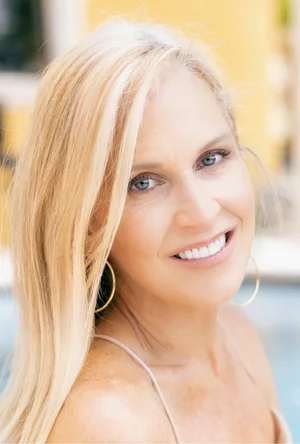
This was me shortly before my breast cancer diagnosis. Looking back, my body was giving me signs that I didn’t yet understand.
In the year leading up to my diagnosis, my periods became irregular, and I had mild spotting in between periods. I was 52, so I thought this was a perimenopausal symptom. Perhaps it was, but I shouldn’t have assumed. Perimenopause is the natural transition to menopause. The average age of perimenopause for women is 52, but it can occur any time after age 40. Keep track of your menstrual cycle so you are paying close attention to your body. Never assume it is normal to have irregular cycles.
I was 53 when I was diagnosed with 90% ER+ (positive) and 90% PR+ (positive) breast cancer. I considered myself extremely healthy—I wasn't overweight, I ate a low-fat, high-fiber, plant-based diet, and I exercised several times per week. However, I have a gene that causes breast cancer, and my stress level was off the charts! Stress can wreak havoc on your overall health, so that is probably what happened to me.

I do a combination of cardo and strength training consistently!
CREATing HORMONAL BALANCE
Besides irregular periods, I didn't have any other signs of hormonal imbalance when I was diagnosed with breast cancer, and perhaps that is because I was already living a healthy lifestyle. Yet, I decided to make more improvements to facilitate hormone regulation and ensure that excess estrogen was exiting my body. I have been extremely intentional in these areas:
De-stressing
Eating a whole-food, plant-based diet
Exercise (combo of cardio and strength training)
Supporting gut health (The gut plays a role in estrogen metabolism and elimination.)
Maintaining a healthy weight (Body fat is metabolically active and can contribute to estrogen production, especially after menopause.)
Before my diagnosis, I was diligent about diet and exercise, so I thought I was on the right track — but wow, I had so much more to learn! Visit the Investigate page to learn more about hormones.